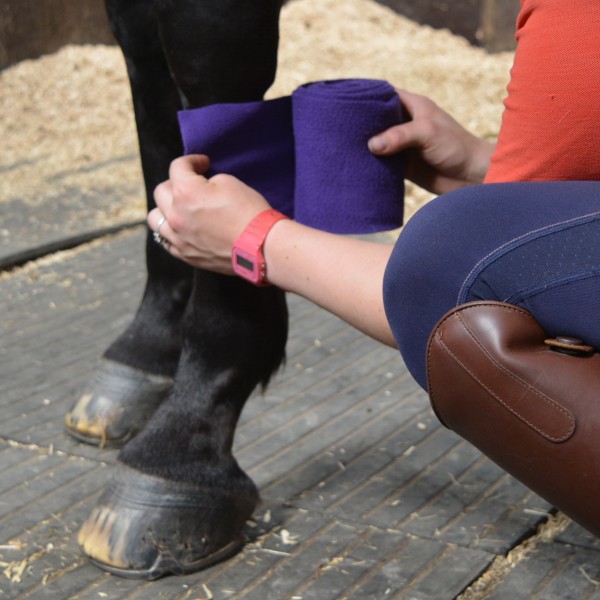
Tie the horse up.
Crouch down on the outside of the horse’s leg and position the bandage roll against the leg just below the knee or hock.
The bandage should be unrolled in the direction of the back of the leg.
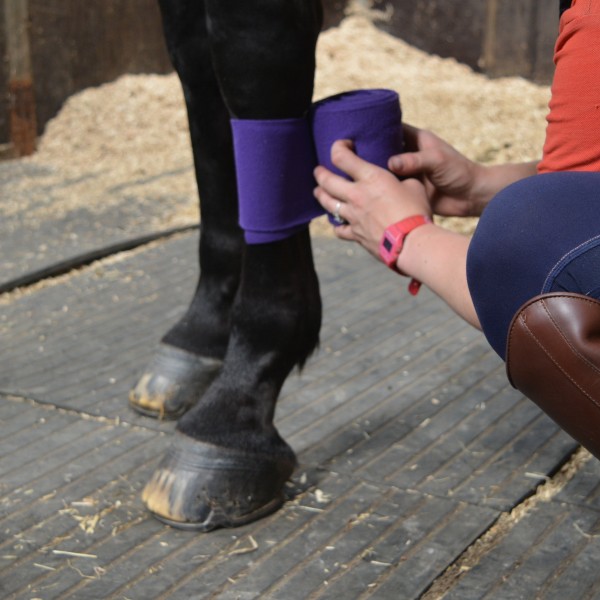
Keeping an even pressure, wrap the bandage around the leg over the previous part of the bandage. This will secure the bandage.
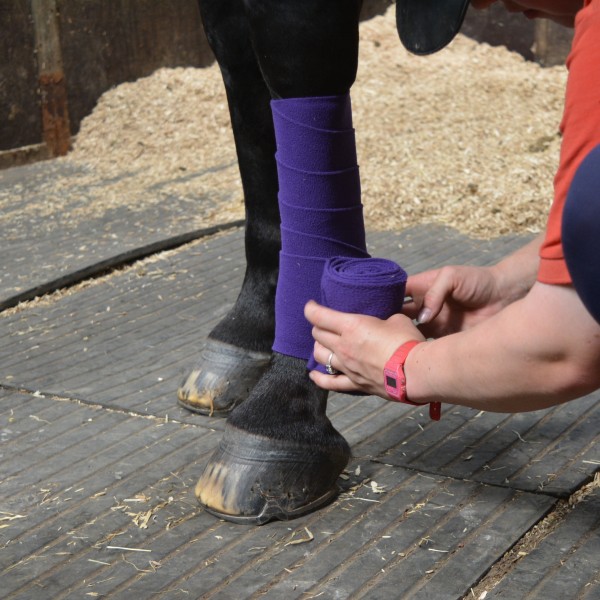
Begin to unroll the bandage, working downwards so the bandage overlaps the previous lap by half the width. Ensure you maintain an even pressure.
To maintain a firm tension on the bandage, only apply pressure on the front of the leg against the cannon bone. The reason being is the flexor tendons at the back of the leg are not stabilised by bone so applying excess pressure on them may cause damage.
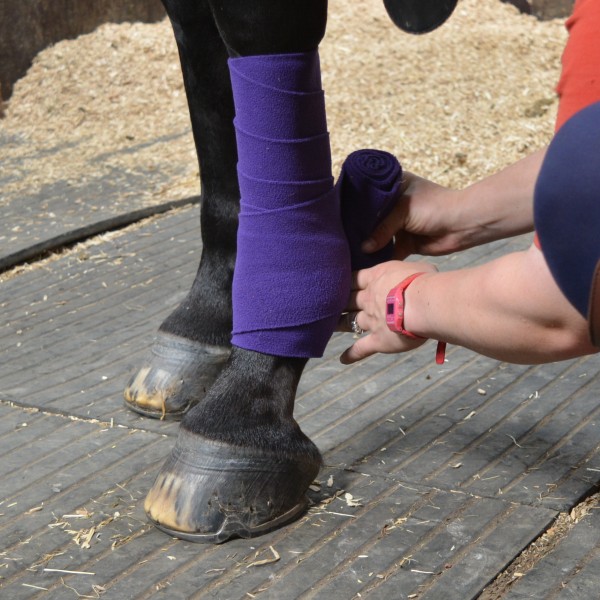
Maintaining the tension continue bandaging downwards until you reach the base of the fetlock.
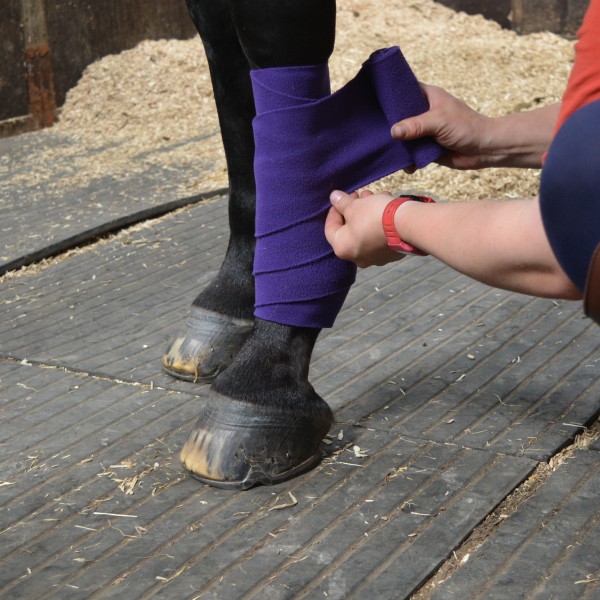
Keeping the same pressure, begin to bandage back up the leg. Once you reach just below the knee or hock, bandage back down the leg again until you reach the end of the bandage.
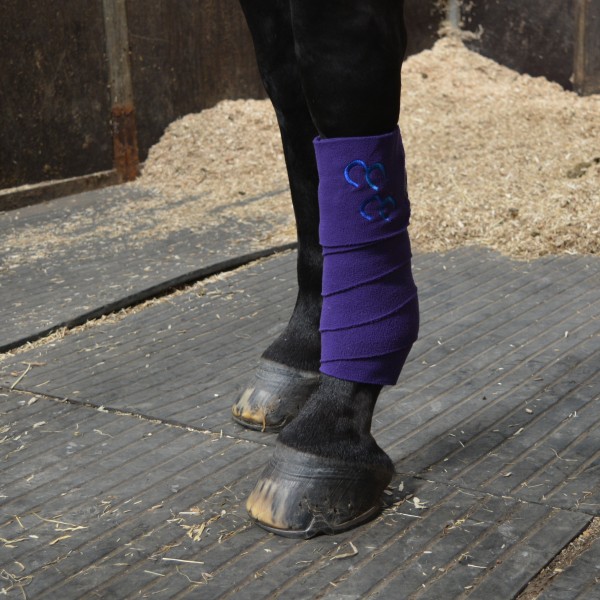
Once you reach the end of the bandage, secure it with the velcro, at exactly the same tension as the bandage. This prevents it interfering with the circulation. The fastenings should be fitted on the outside of the leg, and never around a joint.
Test the tension of the bandage: push 1 finger down the top of the bandage between the bandage and leg. You should be able to snugly get one finger down it.