The snaffle bridle provides communication from the rider's hands to manage the horse's pace, speed and direction whilst being ridden. It can also offer additional control for the handler when leading.
To meet the requirements of different head proportions, they are produced in standard sizes including: shetland (smallest), pony, cob and full (largest). Generally bridles are made from leather, webbing or synthetic materials and are available in a variety of colours, quality, strength and styles.

The headpiece is one continuous strap of leather split, on either side, to make the throatlash and enable the cheekpieces to be attached.
The purpose of the headpiece is to hold the bridle on the horse’s head and, in conjunction with the cheekpieces, it suspends the bit in the mouth.
It should be fitted so that the splits in the headpiece sit just below either side of the ears.
If the headpiece is too big: the bridle will not remain stable on the horse’s head, and the bit may sit too low in the mouth.
If the headpiece is too small: it will fit too tightly around the horse’s ears, plus the throatlash may be too short.

The throatlash is a continuation of the headpiece, its purpose is to keep the bridle in place.
It should be fitted with four fingers, or a fist, between the side of the horse’s cheek and the throatlash strap.
If the throatlash is too big, or loose: it will not secure the bridle correctly and may swing around whilst the horse is moving.
If the throatlash is too small, or tight: it will restrict the horse’s jowl movement or interfere with their throat or breathing.

There are two cheekpieces fitted on either side of the bridle. They fasten from the headpiece and connect to the bit via billets or buckles.
The cheekpieces suspend the bit in the horse’s mouth.
Correctly fitted, they should ideally fasten on the middle holes of the headpiece when the bit is suspended at the correct height. This allows the bit to be adjusted when necessary.
Even when the bit is in use, they should remain flat against the horse’s cheeks.
If the cheekpieces are too long: the bit will sit too low in the horse’s mouth, causing discomfort.
If the cheekpieces are too short: the bit will sit too high in the horse’s mouth, applying excess pressure on the poll and lips.
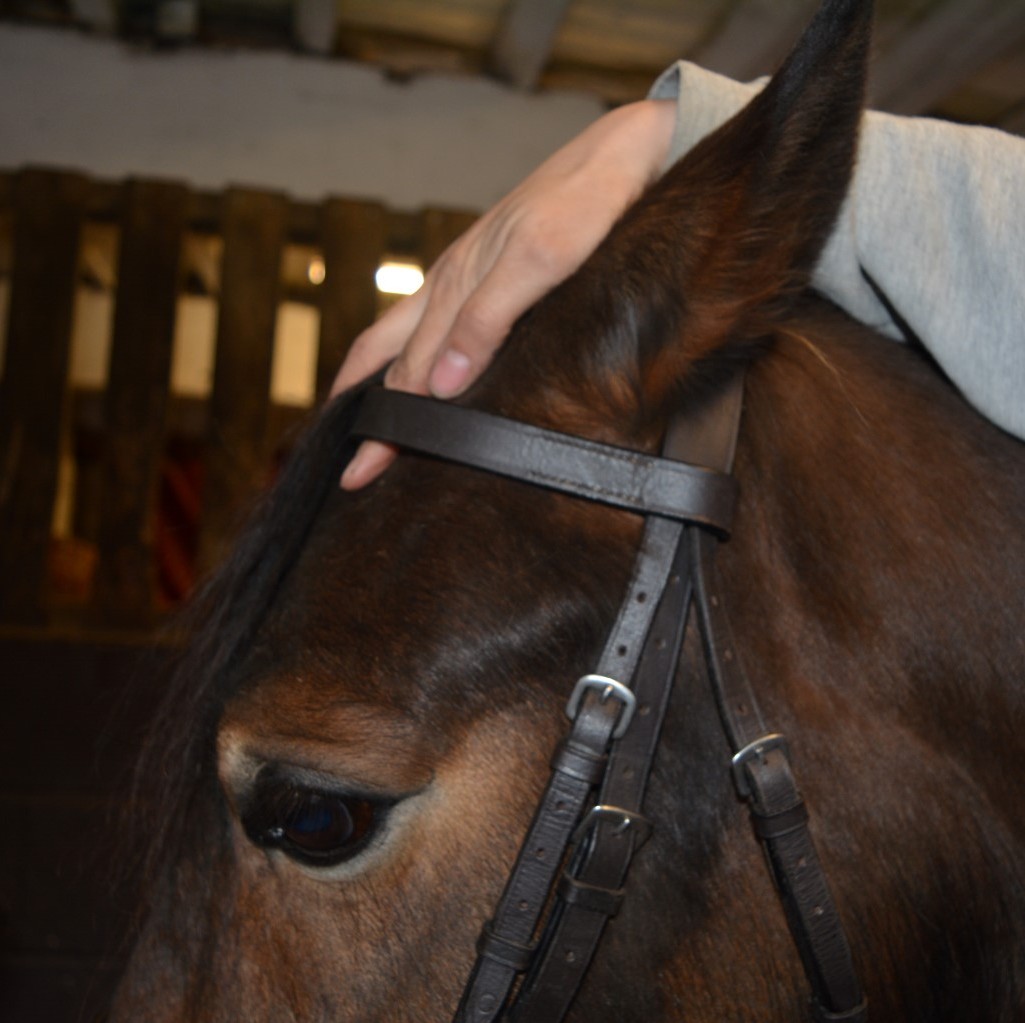
The browband sits across the horse’s forehead, just below the ears. It is used to prevent the headpiece from slipping backwards.
It is fitted with one finger between the forehead and the browband.
If the browband is too big: the headpiece will not be held in the correct position. It will also fall forward, moving around on the horse’s forehead, causing annoyance.
If the browband is too small: it will pull the headpiece forward, causing pinching around the horse’s ears or pressure on their forehead.

The cavesson noseband sits around the horse’s nose area. It is used to prevent the horse’s face looking long in appearance, and is suitable for attaching a standing martingale to.
It should be fitted with two fingers in-between the face and the noseband. However, it can be tightened if the horse opens their mouth excessively, or when used as the upper part of a flash noseband.

The height of the cavesson noseband should be roughly two fingers below the protruding cheekbone.
If the noseband is fitted too high: it can rub on the protruding cheekbones.
If the noseband is fitted too low: it can interfere with the horse’s breathing and cause irritation.

The snaffle bit sits in the horse’s mouth and is attached to the cheekpieces and reins. It provides control whilst riding or handling.
From the side, the bit should create 1-2 wrinkles in the corners of the horse’s mouth.
(See Fit of the Snaffle Bit).

When the bit is pulled out to one side of the horse’s mouth, there should be a ¼ inch over-hang (a rough guide is to fit your little finger in the space).
(See Fit of the Snaffle Bit).
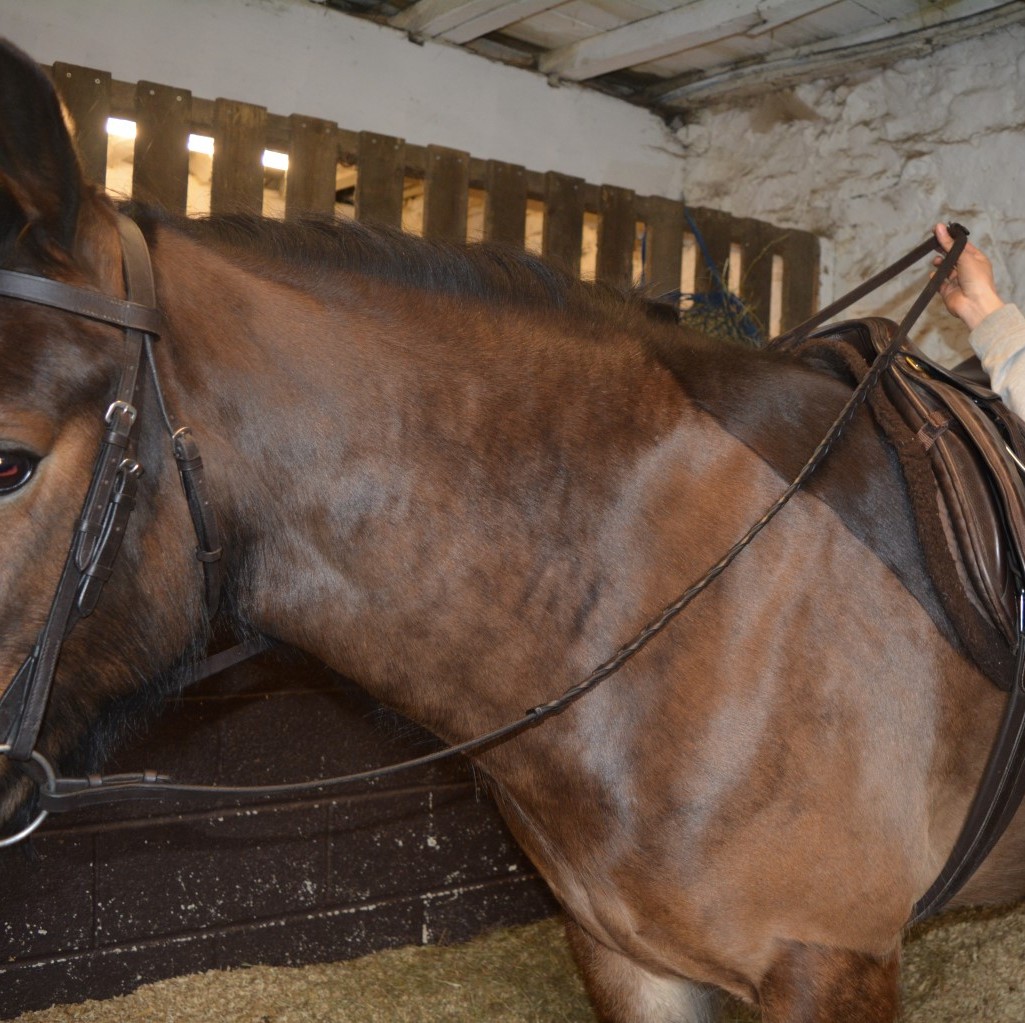
The reins provide communication from the rider’s hands to the horse’s mouth. They are attached to the bit via billets or buckles. They should be the correct length for the horse’s neck, roughly stretching ¾ of the way towards the back of the saddle.
The reins must also be the appropriate width for rider’s hands and for the type of horse being ridden.
If the reins are too thick: it can cause discomfort to the rider’s hands, or difficulty in holding the reins correctly. Both may prevent the rider having sufficient control of the horse.
If the reins are too thin: if an equine is strong to ride, or when extra control is required (such as XC riding), thin reins may not provide the rider with enough control.
If the reins are too long: they will hang too low on the horse’s shoulder creating a hazard as the rider’s foot could get caught in them.
If the reins are too short: if the horse is being ridden on a loose rein or jumping a drop fence, where the reins are slipped, there may not be enough slack. This could prevent the horse stretching their neck adequately, or cause the rider to pull on their mouth.